
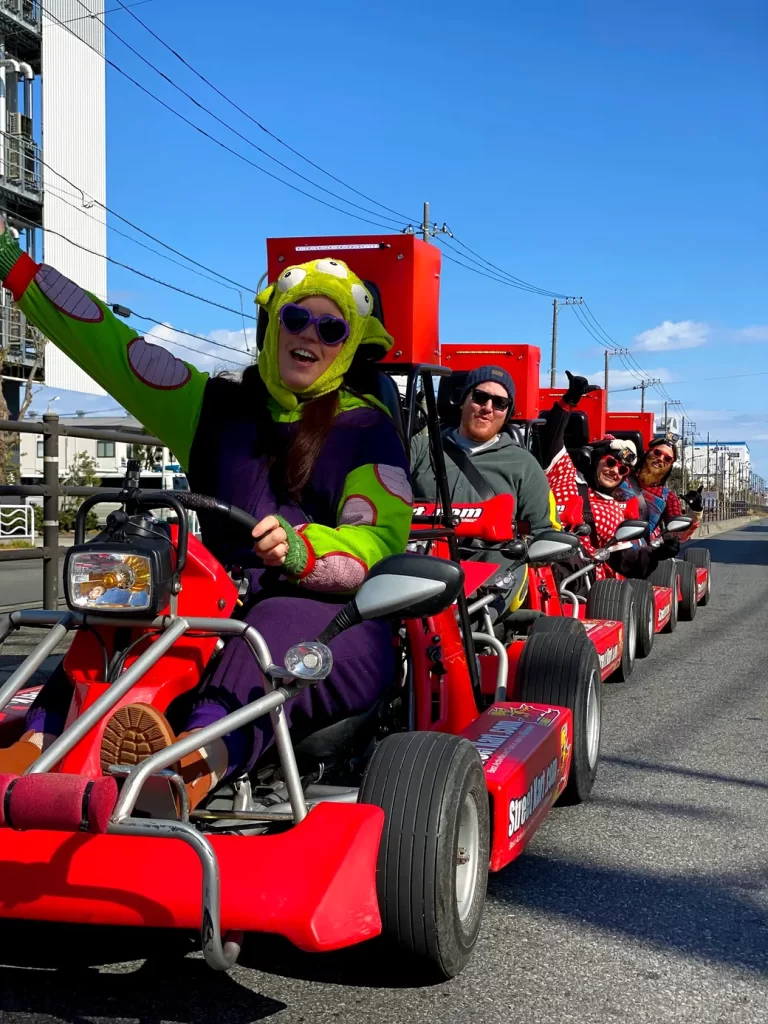
Evening Street Kart in Okinawa | The Faces of Naha’s Streets and Sea from 3 PM to 6 PM
If you’re looking for an activity that lets you truly feel the atmosphere of a city in Okinawa, an evening street kart experience is one of the easier options to consider. The window from 3 PM to 6 PM is especially appealing, because the harsh daytime light begins to soften and the colors of the sky and the way the streets look gradually shift. As a result, even the same Naha scenery tends to leave a different impression than it does at midday. The fact that you can take in both the open feeling of the sea and the bustle of the city center back to back, all while you’re on the move, is part of what makes this time of day such a great match for Okinawa.
The appeal of a street kart experience is that you don’t just gaze at the scenery from afar—you can feel the wind and the shifting air right where you are. It’s a little different from sightseeing through a car window: because you’re engaging with the streetscape within the flow of traffic, Naha’s character tends to stick with you in a more vivid, three-dimensional way. Evening is also the time when the blue of the sky starts to deepen, making it easier to notice the contrast between the brightness near the coast and the colors of the urban areas. For anyone who loves taking photos, it’s a time when you can capture a soft, gentle mood—quite different from the hours of strong, white sunlight.
Why 3 PM to 6 PM in Okinawa Is So Well Suited to the Experience
Okinawa in the 3 o’clock hour is still plenty bright, yet it’s the time when the sharp midday sun begins to settle down. The buildings along the roads, the palm trees, and the colors of the sky spreading out beyond the intersections all become easier to see, and you can clearly sense the boundary between the city and the sky. When you drive a street kart, changes in how the light falls come through directly in the impression the scenery makes, so differences in the time of day are easily reflected in the experience itself. If midday Naha looks crisp and active, then Naha in the 3 o’clock hour begins to take on a slightly calmer expression.
Once you reach the 4 o’clock hour, changes start to appear in the light near the coast and in the shadows on the roads. That signature Okinawan sense of openness remains, but the way the air looks gradually softens, and depth begins to emerge in your field of view. During this time, the difference between the brightness you feel near the sea and the density of color you feel in the city center comes across naturally. Even in a short experience, a distinctive feature is how easily you can sense the layers of scenery switching as you move along.
As you head into the 5 o’clock hour, it becomes a great fit for anyone who wants to plan their time around the sunset. The colors of the sky stop being uniform, and changes appear in how the coastal expanse and the outlines of the city look. Evening in Okinawa isn’t simply about it getting darker—the highlight lies in the transitional expression as the sky shifts from blue to soft, warm hues. In a street kart experience, you can take in that change as a single continuous flow, so it tends to stay in your memory as part of the journey itself, rather than as scattered visits to individual sightseeing spots.
How the Okinawa Location’s Courses Pair with the Evening
The Okinawa location guide on the Street Kart official site introduces an approximately 1-hour course and an approximately 2-hour course. The roughly 1-hour course departs from the Okinawa location, heads toward the area near Naha Airport to enjoy ocean views, and then passes through Kokusai Street on the way back to the shop. It’s structured so you can easily connect the open ocean scenery with the bustle that’s so characteristic of central Naha within a single experience, and when you ride during the evening hours, the shifts in scenery tend to leave an even stronger impression.
The roughly 2-hour course is structured for those who want to savor Okinawa’s scenery for longer. The official guide explains a route that extends out toward the Senagajima area, where you take in coastal views before passing through Kokusai Street. It’s a course that makes it easy to feel the open expanse of the coast and the energy of the city center one after another, and to fold the changing air from evening into the time around sunset into your experience. If you want to follow Okinawa’s many faces at a brisk pace in a short time, the 1-hour option works well; if you’d like to savor the shifting scenery a bit more, the 2-hour option is the way to look at it.
One thing worth keeping in mind here is that the street kart experience proceeds in a tour format. It’s not something where you freely wander and make detours—you follow the guided route, so which scenery you experience, and in what order, becomes important. Because the Okinawa location’s courses connect the way the sea appears with the atmosphere of central Naha in one continuous stretch, the content makes it easy to capture both the “changing sky” and the “changing city” that are so often sought after during the evening hours.
The Okinawan Charm You Can Feel on the 1-Hour Course
The roughly 1-hour course is an easy length to work into your itinerary. It connects smoothly with afternoon sightseeing, café stops, shopping, or dinner plans, and a key appeal is that it doesn’t eat up much of your stay. At the same time, because it includes the open scenery near Naha Airport and the city-like density around Kokusai Street, you can easily feel that quintessentially Okinawan contrast even in a short span.
If you choose this course in the evening, the flow tends to go like this: there’s still brightness at the start, your view opens up at the coast, and the character of the streets stands out more in the latter half. Because the act of moving itself takes on the role of sightseeing, it leads to a kind of satisfaction that’s different from “sightseeing where you stay in one place for a long time.” It’s a structure well suited to anyone who wants to take in Okinawa’s atmosphere in a short time, or who wants to add one stretch of dynamic time to their trip.
The Connection Between Sea and City That Emerges on the 2-Hour Course
The roughly 2-hour course suits those who want to savor that evening Okinawan feeling a little more thoroughly. By including the Senagajima area, the weight of the coastal scenery increases, and the difference in impression as you head back into central Naha becomes easier to feel. The flow from the open expanse of the coast to the bustle of the city is one of the more memorable elements of an Okinawa trip.
When you choose this course during the time from evening into sunset, changes in the sky’s colors tend to influence how the entire scene looks. The color of the sea, the reflections off the road surface, the outlines of the buildings, and the mood of the streets all gradually change, so even driving through the same area, it’s unlikely to feel monotonous—that’s a distinctive feature. If you’re recording with photos or video, differences in mood as time passes come through easily, making it simple to capture material that fits the theme of an Okinawan evening.
Points to Check When Considering a Street Kart Experience
Before booking, the first important step is to confirm the documents required to drive. Required documents differ depending on the type of license and the issuing country or region, so checking the driver’s license guide page in advance helps you understand the process. The official guide describes a valid Japanese driver’s license, an international driving permit based on the 1949 convention, or a combination of documents according to the applicable conditions. Since the detailed conditions may be updated, the practical approach is to check the latest information on the official page before booking.
Also, the Okinawa location’s address is listed on the official site as Higashimachi, Naha City, and it’s described as being within walking distance of Asahibashi Station. When planning your movements within Naha, checking whether the location connects easily to your evening plans makes it easier to map out your day. Sorting out points like whether you’ll fit it in between sightseeing, whether you can easily return before dinner, and how it relates to your accommodation will help you build a comfortable plan.
It’s also reassuring to check details about attire, meeting times, and same-day guidance through the information you receive after booking and the official guide. Because the street kart experience takes place within the road environment, the premise is that you participate according to the on-site guidance. Understanding not just the experience itself but also the flow from check-in to departure makes it easier to read your time allocation on the day.
How to Plan When Considering an Evening Booking
The 3 PM to 6 PM window is a slot that’s easy to connect with the plans before and after it within Okinawa sightseeing. You can readily create a flow where you tour another sightseeing spot until early afternoon, return to Naha, and head straight to the experience, and it’s also easy to consider adding dinner or an evening stroll afterward. While it slots easily into your schedule as just one part of the day, because you get to touch on both sea and city scenery, this time of day has the distinctive quality of not simply being a way to kill spare time.
On an Okinawa trip, plans can lean toward static ways of enjoying yourself—beaches, cafés, shopping, hotel stays. Adding a street kart experience into that mix creates time when you take in the scenery while in motion. Evening in particular is easy to position both as an extension of daytime sightseeing and as a bridge to your evening plans, making it a great time for getting the rhythm of your whole trip in order. Rather than thinking of it as adding another destination, it pairs well when you fold it in as time that changes the way you feel Okinawa’s atmosphere.
As an Experience That Keeps Okinawa’s Evening in Your Memory
What stays with you from a trip is often not just where you went, but the air and the quality of the light at that moment. Evening in Okinawa is a time when the brightness of the sea and the colors of the city intersect, and the impression of the scenery shifts in a short span. Because a street kart experience lets you take in that change while moving, it makes it easier to bring home sensations as memories—sensations that are hard to capture with still sightseeing photos alone.
Whether you choose the roughly 1-hour course or the roughly 2-hour course described in the Okinawa location’s official guide, the structure makes it easy to feel a string of quintessentially Okinawan scenery: the ocean views near Naha Airport, the city atmosphere of Kokusai Street, and—on the 2-hour course—the views toward the Senagajima area. If you want to experience both city and sea as one continuous flow in evening Okinawa, take a look at the courses and booking information on the Street Kart official site and consider the time of day that best fits your itinerary.
We do not rent out any costumes related to Nintendo or “Mario Kart.” We offer only costumes that respect intellectual property rights.
We do not rent out any costumes related to Nintendo or “Mario Kart.” We offer only costumes that respect intellectual property rights.
About Costumes
We do not rent out any costumes related to Nintendo or “Mario Kart.” We offer only costumes that respect intellectual property rights.

